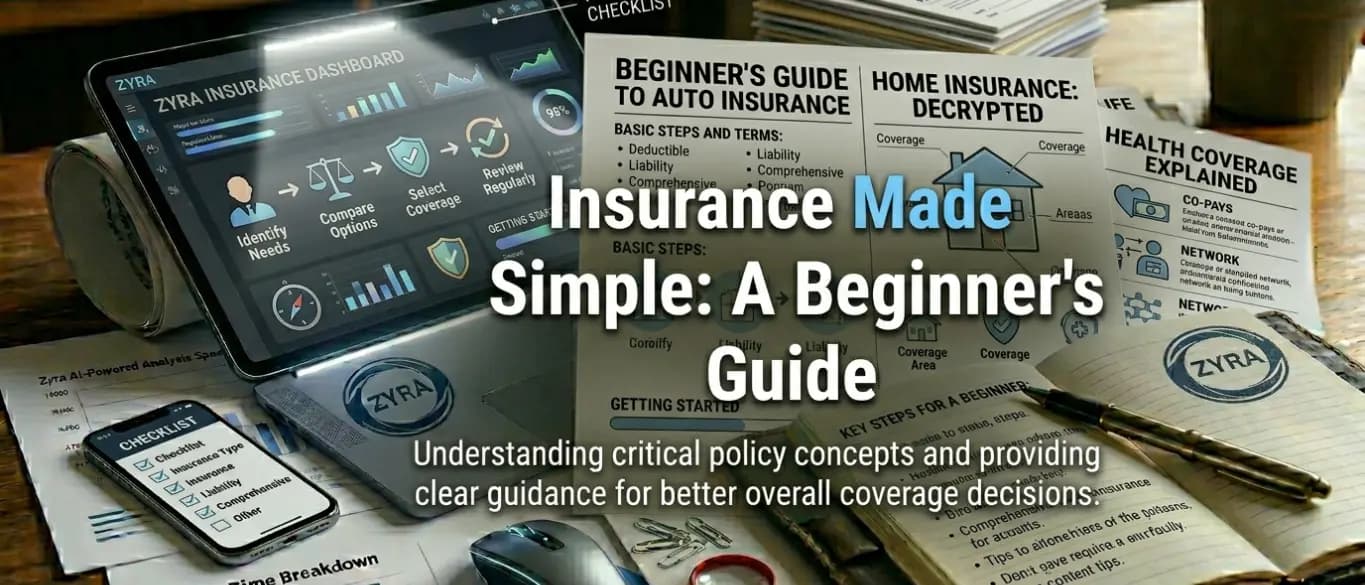
Insurance Made Simple: A Beginner's Guide
Zyra Insurance
Oct 22, 2024
5 min read
Contents
Introduction
What Is Insurance?
Types of Insurance
Key Insurance Terms
Getting Started
Share


Introduction
Insurance can seem complicated, but it doesn't have to be. This beginner's guide to insurance breaks down everything you need to know in simple, easy-to-understand language. Whether you're buying your first policy or trying to understand your existing coverage, this guide is for you.
By the end of this article, you'll understand what insurance is, why you need it, and how to choose the right coverage for your needs.
What Is Insurance?
At its core, insurance is a financial safety net. It's a contract where you pay regular premiums to an insurance company, and in return, they promise to cover specific financial losses if certain events occur.
The Basic Concept
Think of insurance as sharing risk with many people:
- Thousands of people pay small amounts (premiums) into a common pool
- When someone faces a covered loss, the insurance company pays from this pool
- Most people won't claim, but everyone gets peace of mind
- Those who do claim get much more than they paid in premiums
Simple Example: You pay ₹15,000 yearly for health insurance. If you need surgery costing ₹5 lakh, your insurance covers it. You've protected yourself from a potentially devastating expense.
Why Insurance Exists
Insurance exists because:
- Life is unpredictable: Accidents, illnesses, and disasters can happen to anyone
- Costs are rising: Medical care, vehicle repairs, and property damage are expensive
- Financial protection: One major event shouldn't wipe out your life savings
- Peace of mind: Knowing you're covered reduces stress and worry
Types of Insurance You Need to Know
Let's explore the main types of insurance and what they cover:
1. Health Insurance
What it covers: Medical expenses including hospitalization, surgery, treatments, and medications
Why you need it: Healthcare costs are skyrocketing. A single hospital stay can cost lakhs of rupees
Who needs it: Everyone, regardless of age or health status
Quick Tip: Start with at least ₹5 lakh coverage. Consider ₹10-20 lakh if you live in metro cities where healthcare is more expensive.
2. Life Insurance
What it covers: Provides financial support to your family if you pass away
Why you need it: Your family's expenses don't stop if something happens to you
Who needs it: Anyone with financial dependents (spouse, children, parents)
Best option: Term insurance—pure protection at affordable premiums
3. Motor Insurance
What it covers:
- Third-party: Damage to others (legally mandatory)
- Comprehensive: Damage to others + your own vehicle
Why you need it: Required by law; protects against accident-related financial losses
Who needs it: All vehicle owners
4. Home Insurance
What it covers: Property damage from fire, theft, natural disasters, and liability
Why you need it: Your home is likely your biggest asset
Who needs it: Homeowners, especially those with home loans
5. Travel Insurance
What it covers: Medical emergencies abroad, trip cancellations, lost baggage, delays
Why you need it: Medical treatment abroad is extremely expensive
Who needs it: Anyone traveling internationally
Key Insurance Terms You Must Know
Understanding these terms will help you make better decisions:
Premium
The amount you pay (monthly, quarterly, or yearly) to keep your insurance active. Think of it as the subscription fee for your protection.
Sum Insured / Coverage Amount
The maximum amount the insurance company will pay for covered claims. For example, a health policy with ₹10 lakh sum insured will cover up to ₹10 lakh in medical expenses.
Deductible
The amount you pay before insurance kicks in. If you have a ₹50,000 deductible and a ₹2 lakh claim, you pay ₹50,000 and insurance pays ₹1.5 lakh.
Tip: Higher deductible = Lower premium (but more out-of-pocket expense)
Claim
A formal request to your insurance company for payment based on the terms of your policy.
Network Hospitals/Garages
Healthcare facilities or repair shops that have agreements with your insurer for cashless services.
Cashless vs Reimbursement
- Cashless: Insurance company pays hospital directly (at network hospitals)
- Reimbursement: You pay first, then claim money back from insurer
Waiting Period
The time you must wait before certain coverages become active:
- Initial: 30 days for illness (accidents covered from day 1)
- Pre-existing: 2-4 years for conditions you had before buying
- Specific diseases: 1-2 years for certain conditions
Exclusions
Things NOT covered by your policy. Always read exclusions carefully—they're as important as what's covered.
Getting Started with Insurance: A Step-by-Step Guide
Step 1: Assess Your Needs
Ask yourself:
- Do I have dependents who rely on my income? → Life insurance
- Can I afford a major medical emergency? → Health insurance
- Do I own a vehicle? → Motor insurance
- Do I own property? → Home insurance
Step 2: Start with Essentials
Priority order:
- Health insurance (most important—medical emergencies are common and expensive)
- Life insurance (if you have dependents)
- Motor insurance (if you have a vehicle—legally required)
- Others (home, travel as needed)
Step 3: Determine Coverage Amount
- Health: ₹5-20 lakh depending on your city and family size
- Life: 10-15 times your annual income
- Motor: Vehicle's current market value (for comprehensive)
Step 4: Compare Policies
Don't just look at premium! Compare:
- Coverage scope (what's included)
- Exclusions (what's NOT covered)
- Claim settlement ratio (% of claims approved)
- Network size (hospitals/garages)
- Customer reviews and service quality
Warning: Don't buy solely based on premium. The cheapest policy often has the most exclusions and worst claim experience.
Step 5: Buy from Reliable Sources
Purchase through:
- Insurance company websites (direct buying)
- Licensed insurance agents
- Trusted insurance aggregators
- Banks (for select policies)
Step 6: Read Before You Sign
Always read:
- Policy document (terms and conditions)
- Coverage details
- Exclusions list
- Claim process
- Renewal terms
Step 7: Keep Documents Safe
Maintain:
- Policy documents (digital + physical copies)
- Premium payment receipts
- Claim-related documents
- Communication with insurer
Common Beginner Mistakes to Avoid
- Delaying purchase: "I'm young and healthy" → Accidents don't wait
- Buying insufficient coverage: ₹2 lakh health cover won't help much in a serious illness
- Not reading policy: Assuming something is covered when it's not
- Hiding information: Non-disclosure can lead to claim rejection
- Letting policy lapse: Missing premium payments cancels your coverage
- Mixing investment with insurance: Buying ULIPs/endowment plans instead of pure term insurance
Golden Rule: Buy insurance when you don't need it, because when you need it, you can't buy it. The best time to buy insurance is NOW.
Final Thoughts
Insurance isn't complicated once you understand the basics. Start with essential coverage—health and life—and build from there. Don't overthink it; having basic coverage is far better than having none while you search for the "perfect" policy.
Remember: Insurance is not an expense—it's protection for everything you've worked hard to build. Take that first step today, and secure your financial future.